
EMIs don’t look dangerous at first
EMIs: The Only Practical Way to Handle Them They look small.
- ₹2,999/month
- ₹5,400/month
- ₹8,750/month
Affordable.
Manageable.
But stack a few together—and something changes.
Your income is still coming in.
But your freedom quietly disappears.
If you’re dealing with EMIs, the goal isn’t to escape them instantly.
It’s to control them before they control you.
What people believe about EMIs vs what’s actually true
What You Hear
- “EMIs make things affordable”
- “Low monthly payment = smart decision”
- “No-cost EMI = free deal”
What’s Actually True
- EMIs delay the pain—not remove it
- Monthly affordability hides total cost
- “No-cost EMI” often includes hidden discounts lost or fees adjusted
EMIs don’t reduce cost.
They spread it—and sometimes increase it.
How EMIs actually work (simple, no jargon)
Every EMI has 3 parts:
- Principal → what you borrowed
- Interest → cost of borrowing
- Time → how long you stay committed
Longer tenure = smaller EMI
But also = more interest paid
Example:
- ₹1 lakh loan
- 1 year → less interest
- 3 years → much more interest
Lower EMI often means higher total cost.
The real problem with EMIs (no one tells you this)
It’s not the money.
It’s the mental trap.
You start thinking:
- “It’s just ₹3,000”
- “I can handle one more EMI”
- “Next month I’ll manage better”
Then suddenly:
- Salary comes
- EMIs go out
- You adjust the rest
You’re earning—but not deciding.
That’s the real cost.
A simple system to control your EMIs (this works)
Forget complicated strategies.
Use this:
1 The 30% Rule (Non-Negotiable)
Your total EMIs should never exceed:
30% of your monthly income
Example:
- Salary: ₹50,000
- Max EMI: ₹15,000
Cross this → stress starts.
2 The “Pause Before EMI” Rule
Before taking any new EMI, ask:
- Would I buy this if I had to pay full cash today?
If answer = no
→ Don’t take EMI
3 Kill High-Interest EMIs First
Not all EMIs are equal.
Priority:
- Credit card EMIs (very high interest)
- Personal loans
- Consumer durable EMIs
- Home loans (lowest priority)
Highest interest = biggest enemy
4 One EMI In, One EMI Out Rule
If you already have EMIs:
Don’t add a new one
unless one is fully closed
This prevents stacking.
5 Prepay Whenever Possible
Even small prepayments:
- Reduce interest
- Shorten tenure
- Increase control
Example:
Pay ₹10,000 extra → saves months of EMI
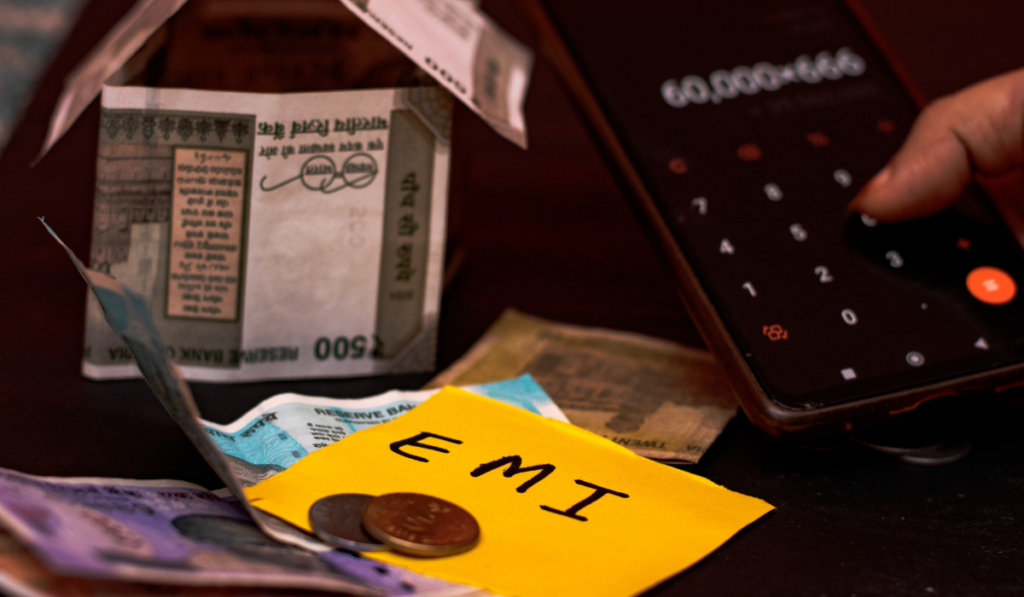
Real example (this is where people wake up)
Person earns ₹60,000/month
EMIs:
- Phone: ₹3,000
- Bike: ₹5,000
- Personal loan: ₹7,000
Total: ₹15,000
Feels manageable.
Then adds:
- Laptop EMI: ₹4,000
Now:
- ₹19,000 gone every month
Almost 1/3 income locked.
Nothing broke.
But everything became tighter.
Honest truth about EMIs
What EMIs help with:
- Managing large purchases
- Cash flow flexibility
- Access to important assets (like home, education)
What EMIs don’t do:
- Make things cheaper
- Improve financial discipline
- Replace savings
Where people go wrong:
- Too many small EMIs
- Buying wants, not needs
- Ignoring total cost
- Depending on future income
A smarter way to live with EMIs
Use EMIs for:
- Home
- Education
- Essential assets
Avoid EMIs for:
- Phones
- Lifestyle upgrades
- Impulse purchases
EMI should support your life.
Not define it.
A simple mindset shift (this changes everything)
Stop asking:
“Can I afford this EMI?”
Start asking:
“Do I want to commit my future income to this?”
That question slows you down.
And that’s powerful.
Final thought
EMIs are not bad.
But they are sticky.
Once they start, they stay.
The goal isn’t zero EMIs.
It’s controlled EMIs.
Because in the end:
Financial stress doesn’t come from big expenses.
It comes from too many small, ongoing commitments.
And once you see that clearly—
You start choosing differently.
SBI vs Axis vs HDFC vs ICICI Credit Card: Which One Actually Fits You?




2 thoughts on “EMIs: The Only Practical Way to Handle Them (Without Stress or Regret)”