
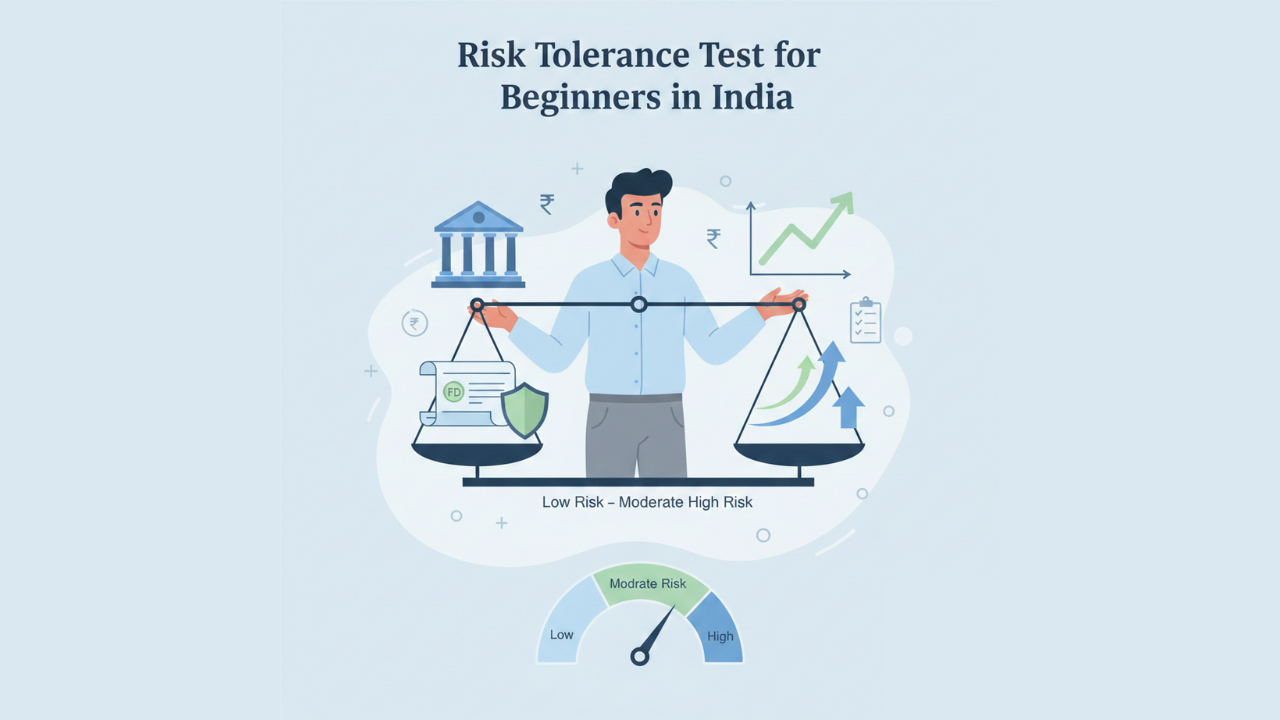
Risk Tolerance Test for Beginners in India Simple Guide to Know Your Investment Risk (2026)
Risk Tolerance Test for Beginners in India Learn what risk tolerance means, how beginners in India can test their risk appetite, and how to choose investments based on low, moderate, or high risk tolerance in 2026.
Introduction: Why Risk Tolerance Matters in Investing
One of the biggest mistakes beginner investors in India make is starting investments without understanding their own risk tolerance.
When markets fall, many people panic, stop SIPs, or sell investments at a loss—not because the investment was bad, but because it did not match their comfort level with risk.
Understanding your risk tolerance helps you:
-
Choose investments you can stick with
-
Stay calm during market ups and downs
-
Avoid emotional decisions
-
Build wealth steadily over the long term
This beginner-friendly guide explains risk tolerance in simple terms and includes an easy self-assessment test designed for Indian investors, updated for 2026.
Quick Start Checklist: Risk Tolerance Basics
-
✅ Know what risk tolerance means
-
✅ Understand your comfort with losses
-
✅ Match investments to your personality
-
✅ Avoid panic selling
-
✅ Invest with confidence
📌 Pro Tip:
A good investment is one you can hold during bad markets without stress.
1. What Is Risk Tolerance?
Risk tolerance is your ability and willingness to handle ups and downs in the value of your investments.
It is influenced by:
-
Income stability
-
Financial responsibilities
-
Investment time horizon
-
Emotional response to losses
Simple Example
Two people invest ₹1 lakh:
-
Person A panics when value falls to ₹90,000
-
Person B stays calm and continues investing
👉 Person B has higher risk tolerance.
📌 Risk tolerance is psychological, not just financial.
2. Why Beginners Must Know Their Risk Tolerance
Most investment losses happen due to wrong risk selection, not bad products.
Common Beginner Mistakes
-
Investing in high-risk funds without understanding volatility
-
Stopping SIPs during market corrections
-
Selling equity investments too early
-
Copying friends or social media tips
📌 Important:
Risk tolerance is personal. Age and income alone don’t decide it.
3. Factors That Determine Risk Tolerance in India
1️⃣ Age
Younger investors usually have higher tolerance due to longer time horizons.
2️⃣ Income Stability
-
Fixed / government job → higher tolerance
-
Freelance / irregular income → lower tolerance
3️⃣ Financial Responsibilities
EMIs, dependents, and loans reduce risk capacity.
4️⃣ Investment Time Horizon
-
Short-term goals (1–3 years) → low risk
-
Long-term goals (10+ years) → higher risk
5️⃣ Emotional Behaviour
If market news causes anxiety, risk tolerance is likely low.
4. Risk Tolerance Levels Explained
| Risk Level | Personality Traits | Suitable Investments |
|---|---|---|
| Low Risk | Safety-focused, loss-averse | Savings, FD, PPF, Debt Funds |
| Moderate Risk | Balanced, patient | Hybrid Funds, Large-Cap Funds |
| High Risk | Comfortable with volatility | Equity Funds, Mid & Small-Cap Funds |
📌 Note:
Risk tolerance can change with age, income, and life stage.
5. Simple Risk Tolerance Test for Beginners (India)
Answer honestly. Choose the option closest to you.
Q1. If your investment falls 10% in a month, what will you do?
A. Withdraw immediately
B. Wait and monitor
C. Invest more
Q2. What is your investment goal timeline?
A. Less than 3 years
B. 3–7 years
C. More than 7 years
Q3. How stable is your income?
A. Unstable / irregular
B. Moderately stable
C. Very stable
Q4. Which return do you prefer?
A. Guaranteed but low
B. Moderate and steady
C. High with ups & downs
Q5. How do market crashes make you feel?
A. Anxious and fearful
B. Slightly uncomfortable
C. Calm and long-term focused
Scoring
-
A = 1 point
-
B = 2 points
-
C = 3 points
Result Interpretation
| Total Score | Risk Tolerance |
|---|---|
| 5–8 | Low Risk |
| 9–12 | Moderate Risk |
| 13–15 | High Risk |
6. Investment Strategy Based on Risk Tolerance
🟢 Low Risk Investors
-
Savings Account
-
Fixed Deposits
-
PPF / NSC
-
Liquid & Short-Term Debt Funds
🟡 Moderate Risk Investors
-
Hybrid Mutual Funds
-
Large-Cap Equity Funds
-
Balanced Advantage Funds
🔴 High Risk Investors
-
Equity Mutual Funds
-
Mid-Cap & Small-Cap Funds
-
Long-term Equity SIPs
📌 Pro Tip:
SIPs help manage volatility even for high-risk investors.
7. Risk Tolerance vs Risk Capacity (Very Important)
| Risk Tolerance | Risk Capacity |
|---|---|
| Emotional comfort | Financial ability |
| Psychological | Practical |
| Can change quickly | Depends on income & assets |
Example
You may emotionally accept risk but cannot afford losses financially.
📌 Always invest based on the lower of the two.
8. Common Myths About Risk Tolerance
❌ Beginners must avoid equity
❌ High returns require panic
❌ Risk tolerance never changes
❌ Age alone decides risk level
✔ Truth: Knowledge and experience increase tolerance over time.
9. FAQs: Risk Tolerance for Indian Beginners
Can risk tolerance change?
Yes. Income, responsibilities, and experience affect it.
Should I retake this test?
Yes—every 2–3 years or after major life events.
Is low risk bad?
No. The best strategy is one you can stick with.
Do investment apps assess risk?
Yes, but personal understanding is still essential.
10. Key Takeaways
-
Risk tolerance decides your ideal investments
-
Wrong risk level leads to panic and losses
-
Self-assessment prevents emotional decisions
-
Match investments to comfort, not trends
📌 Golden Rule:
Successful investors control emotions more than markets.
Conclusion
Understanding your risk tolerance is the first and most important step in investing for beginners in India.
Before starting SIPs, mutual funds, or stocks, know how much volatility you can handle comfortably. When your investments align with your personality, wealth creation becomes calmer, smarter, and sustainable over the long term—especially in 2026 and beyond.
About the Author
Hussain is a personal finance writer focused on helping Indian beginners invest confidently by understanding risk, building discipline, and making informed long-term financial decisions.
Internal Links
External References
Disclaimer
This article is for educational purposes only and does not constitute investment advice. All investments are subject to market risks. Please assess your financial situation before investing.






1 thought on “Risk Tolerance Test for Beginners in India Simple Guide to Know Your Investment Risk (2026)”